Vector Art of Four Halloween Pumpkin: A Comprehensive Guide for Designers and Creators
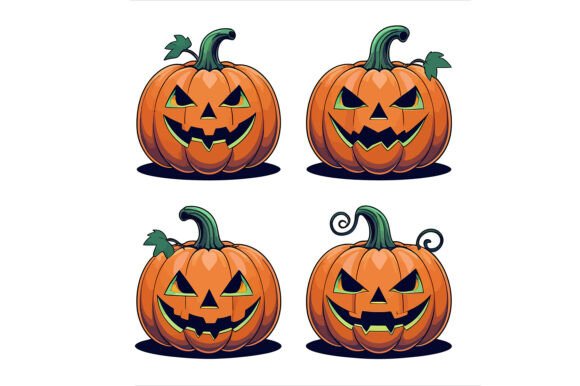
The intersection of seasonal aesthetics and professional design often hinges on the availability of high-quality assets that balance creativity with technical flexibility. When searching for autumnal motifs, few elements are as iconic or versatile as the pumpkin. However, not all digital illustrations are created equal. The Vector Art of Four Halloween Pumpkin represents a specific category of design resources that cater to both the casual hobbyist and the seasoned graphic designer. This collection offers more than just a static image; it provides a foundational toolkit for transforming generic holiday concepts into unique, branded experiences.
Understanding the value of vector-based assets is crucial in today's digital landscape. Unlike raster images, which degrade when enlarged, vector graphics maintain crisp edges and perfect clarity at any scale. This characteristic makes the Vector Art of Four Halloween Pumpkin particularly valuable for projects ranging from tiny social media icons to massive outdoor banners. By examining the technical specifications, practical applications, and creative potential of this specific illustration set, creators can maximize their workflow efficiency while ensuring professional-grade results.
The Technical Advantage of EPS and Vector Formats
At the core of this design resource lies the EPS (Encapsulated PostScript) file format. For professionals working in industries such as print-on-demand, apparel manufacturing, or large-format printing, the distinction between an EPS file and a standard JPEG is the difference between a usable asset and a compromised one. The EPS format contains mathematical data defining lines, curves, and shapes, allowing for infinite scalability without pixelation.
When utilizing the Vector Art of Four Halloween Pumpkin, designers gain the ability to resize the illustration to fit a postage stamp or a billboard with zero loss in quality. This is achieved because the software interprets the geometric coordinates rather than a fixed grid of pixels. Furthermore, the fully editable nature of the EPS file means that every element within the four pumpkin designs can be manipulated. Users can alter stroke weights, adjust anchor points, and completely restructure the composition if necessary.
In addition to the vector file, the package includes a high-resolution JPEG. While this raster version lacks the editability of its vector counterpart, it serves a critical function in the modern workflow. It allows for immediate use in contexts where vector editing is unnecessary or unsupported, such as quick mockups, web previews, or presentations. This dual-format approach ensures that the creator has a ready-to-use option for speed and a flexible option for precision, covering the full spectrum of project requirements.
Customization Capabilities and Color Management
One of the most significant advantages of the Vector Art of Four Halloween Pumpkin is the depth of customization it permits. Halloween themes often require specific color palettes to match brand guidelines or personal preferences. With a fully editable vector file, users are not limited to the original orange and black scheme. They can instantly swap colors to create a pastel Halloween look, a monochromatic corporate version, or a vibrant neon aesthetic.
This level of control extends beyond simple recoloring. Designers can isolate individual pumpkins from the group of four to use them as standalone logos or combine them with other vector elements to create complex scenes. The ability to change details—such as the shape of the stem, the texture of the rind, or the expression on the face—allows for the creation of derivative works that feel entirely original. This flexibility is essential for businesses looking to avoid generic stock imagery and establish a distinct visual identity during the holiday season.
Real-World Applications Across Industries
The versatility of these pumpkin illustrations translates into a wide array of practical applications across various sectors. From small business owners launching seasonal product lines to educators creating classroom materials, the utility of this asset is broad. Understanding where and how to apply these graphics can unlock new revenue streams and enhance communication strategies.
Print-on-Demand and Apparel Merchandise
For entrepreneurs engaged in print-on-demand (POD) services, the quality of the source file is paramount. T-shirts, hoodies, tote bags, and mugs require high-resolution artwork to ensure that the final printed product looks sharp and professional. The Vector Art of Four Halloween Pumpkin is ideally suited for this purpose. Because the files are scalable, they can be resized to fit different garment sizes without worrying about blurriness around the edges.
Moreover, the editable nature of the file allows POD sellers to create variations of a single design. One seller might use the pumpkins for a children's line with bright, playful colors, while another might adapt the same vectors for an adult-oriented, edgy streetwear collection by darkening the tones and adding texture overlays. This adaptability reduces the need to commission custom art for every new product variation, significantly lowering overhead costs.
Crafting, Scrapbooking, and DIY Projects
Beyond commercial applications, these vector assets are a treasure trove for hobbyists and crafters. In the world of digital scrapbooking, having high-quality, resizable elements allows for precise placement on digital pages. The Vector Art of Four Halloween Pumpkin can be imported into crafting software like Silhouette Studio or Cricut Design Space to cut vinyl decals, stencil patterns, or paper decorations.
DIY enthusiasts can also utilize the included JPEG for quick reference or direct printing on cardstock for handmade greeting cards and invitations. The clean lines and distinct shapes of the vector art make them excellent candidates for laser cutting wood or acrylic, enabling the creation of three-dimensional wall art or decorative centerpieces. The transition from a digital file to a physical object is seamless, bridging the gap between screen and reality.
Educational Materials and Web Graphics
Educators and content creators frequently seek engaging visuals to capture the attention of their audience. The Vector Art of Four Halloween Pumpkin offers a safe, friendly, and festive aesthetic suitable for school newsletters, lesson plans, and online courses. Teachers can customize the pumpkins to represent different subjects, perhaps using them as containers for math problems or reading prompts.
In the realm of web design, these illustrations serve as effective focal points for landing pages, blog headers, and email marketing campaigns. The lightweight nature of optimized vector formats (when converted to SVG for web use) ensures fast loading times, which is a critical factor for user experience and SEO. The ability to animate vector elements further enhances their utility, allowing for subtle movements that bring the Halloween theme to life without heavy video files.
The Role of AI-Assisted Creation in Modern Design
A notable aspect of this specific illustration set is its origin story. The design is an original illustration created with the assistance of AI-generated concepts, which were then fully vectorized, resized, and carefully edited by a human designer. This hybrid approach highlights a growing trend in the creative industry where artificial intelligence serves as a brainstorming partner rather than a replacement for human skill.
The initial concept generation via AI allows for rapid exploration of styles and compositions that might take hours to sketch manually. However, raw AI output often suffers from inconsistencies, jagged lines, and a lack of structural integrity required for professional production. The human intervention in this process is what elevates the asset to a usable standard. By meticulously tracing, cleaning up paths, and organizing layers, the designer ensures that the Vector Art of Four Halloween Pumpkin meets the rigorous demands of print and digital production.
This workflow demonstrates the importance of the "human-in-the-loop" model. It combines the speed and novelty of generative AI with the precision and artistic judgment of a professional illustrator. For consumers and businesses, this means receiving a product that benefits from cutting-edge technology while retaining the reliability and polish expected of traditional design work. It reassures buyers that the file is not merely a low-effort export but a refined tool ready for serious application.
Strategic Considerations for Implementation
While the Vector Art of Four Halloween Pumpkin offers immense flexibility, successful implementation requires thoughtful planning. Designers should consider the context in which the art will appear. For instance, when adapting the pumpkins for a logo, simplicity is key. Removing excessive detail and focusing on the silhouette may be necessary for small-scale applications like favicons or embroidery.
Color psychology also plays a role. While orange is the traditional color for Halloween, the editable nature of the vector file invites experimentation. Brands should test how different color combinations align with their overall messaging. A healthcare provider might opt for softer greens and yellows to maintain a sense of wellness even during the spooky season, whereas a gaming company might lean into deep purples and neons.
Furthermore, understanding licensing and usage rights is essential. As this design is an original illustration, users must adhere to the terms provided by the creator. Whether the license allows for commercial resale, modification, or unlimited reproductions, clarity on these points prevents legal complications down the line. The inclusion of both EPS and JPEG files suggests a comprehensive license intended for broad usage, but verifying the specific scope remains a best practice for professional integrity.
Maximizing Value Through Workflow Integration
To get the most out of the Vector Art of Four Halloween Pumpkin, integrating it into an efficient design workflow is recommended. Start by importing the EPS file into your preferred vector software, such as Adobe Illustrator or CorelDRAW. Organize the layers immediately, separating the four pumpkins and their individual components. This organization facilitates quick iterations and saves time when making adjustments later.
For teams collaborating on a project, the vector format allows multiple designers to work on different aspects of the same asset simultaneously. One designer might focus on coloring the pumpkins, while another adds background elements or typography. The non-destructive nature of vector editing ensures that changes can be undone or modified without degrading the original file quality.
Finally, maintaining a library of these types of assets can streamline future projects. By saving customized versions of the pumpkin art with specific color codes or layout configurations, organizations can build a cohesive visual language that can be deployed quickly for upcoming seasonal campaigns. This proactive approach to asset management turns a single purchase into a long-term resource that supports continuous creativity and operational efficiency.
Ultimately, the Vector Art of Four Halloween Pumpkin stands as a testament to the power of adaptable design resources. By combining the scalability of vector technology with the creative spark of AI-assisted ideation and human refinement, it offers a solution that meets the diverse needs of today's creators. Whether used to launch a new merchandise line, decorate a classroom, or enhance a digital campaign, these illustrations provide the foundation for memorable and impactful Halloween designs.