Vector Art of Cute Cartoon Clouds: A Practical Guide for Designers
In the realm of digital design, the choice of asset often dictates the final quality and versatility of a project. The Vector Art of Cute Cartoon Clouds represents a specific category of graphic resources that blends whimsical aesthetics with technical precision. Unlike standard raster images, these assets are constructed using mathematical paths rather than pixels, offering a level of scalability and editability that is essential for professional workflows. For adults navigating the complex landscape of design resources—whether for print-on-demand services, educational materials, or branding elements—understanding the nuances of this format is critical to making an informed investment.
This guide explores the distinct characteristics of Vector Art of Cute Cartoon Clouds, compares them against alternative formats, and evaluates their suitability for various creative scenarios. By examining the strengths, tradeoffs, and practical applications, designers can determine if this resource aligns with their specific project requirements without relying on marketing hype.
Defining the Asset: Scalability and Editability
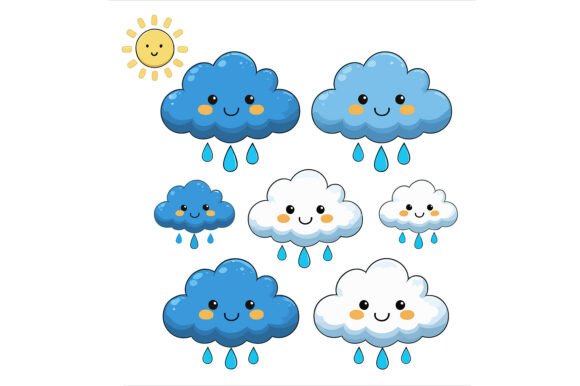
The core value proposition of Vector Art of Cute Cartoon Clouds lies in its file structure. Typically delivered as an EPS (Encapsulated PostScript) file, this format allows the illustration to be resized infinitely without any degradation in image quality. This is a fundamental distinction from raster-based images, such as JPEGs or PNGs, which rely on a fixed grid of pixels. When a raster image is enlarged beyond its original resolution, it becomes pixelated and blurry, rendering it unsuitable for large-format printing like posters or banners.
With vector art, the lines defining the cute cartoon clouds remain crisp and sharp regardless of scale. Whether the design needs to appear as a small icon on a mobile app or a massive mural on a wall, the visual integrity remains intact. Furthermore, the "fully editable" nature of these files empowers users to modify the artwork directly within vector software. Designers can alter color palettes to match brand guidelines, adjust the curvature of the cloud shapes, or separate individual elements for more complex compositions. This flexibility transforms a static image into a dynamic tool that can adapt to evolving design needs.
Comparing Formats: Vector vs. Raster Alternatives
When evaluating resources for a project, it is essential to compare Vector Art of Cute Cartoon Clouds with other available options. The primary alternative is high-resolution raster imagery. While a high-quality JPEG version is often included alongside vector files for quick previewing or immediate web use, it lacks the structural advantages of the EPS format. If a project requires strict adherence to a specific size and does not involve future resizing, a raster image might suffice. However, for any application requiring versatility, the vector format is superior.
Another comparison point is the source of the artwork. Many stock libraries offer pre-made illustrations that are locked or limited in their editability. In contrast, the Vector Art of Cute Cartoon Clouds described here emphasizes full customization. Additionally, while AI-generated images have become prevalent, they often come as raster files with unpredictable artifacts when scaled. The specific asset in question combines AI-assisted concept generation with manual vectorization. This hybrid approach ensures the initial creativity of AI is retained while applying human oversight to clean up paths, ensure logical layer structures, and guarantee professional-grade output. This results in a cleaner, more reliable product compared to raw AI outputs that may require significant cleanup before use.
Strengths and Tradeoffs
Understanding the tradeoffs involved in choosing this type of asset is vital for efficient project management. The primary strength of Vector Art of Cute Cartoon Clouds is its longevity and adaptability. Once acquired, the file serves as a permanent asset that can be reused across different media types—from t-shirts to greeting cards—without needing to purchase new licenses or higher-resolution versions. The ability to change colors instantly also saves time during the iterative design process, allowing for rapid prototyping of different themes.
However, there are limitations to consider. Working with vector files requires access to compatible software, such as Adobe Illustrator, CorelDRAW, or Inkscape. Users who lack experience with these tools may find the learning curve steep compared to simply dragging and dropping a JPEG into a presentation slide. Furthermore, while the "cute cartoon" style is versatile, it may not fit every aesthetic. Projects requiring photorealism or hyper-minimalist geometric abstraction might find this playful style less appropriate. The decision to use this asset should be driven by the target audience and the desired emotional tone of the final product.
Ideal Use Cases and Application Scenarios
The versatility of Vector Art of Cute Cartoon Clouds makes it suitable for a wide range of applications, particularly those where clarity and charm are paramount. One of the most common uses is in the creation of print-on-demand products. Because the vector format supports high-quality printing on various substrates, it is ideal for apparel merchandise, stickers, and mugs. The crisp lines ensure that details do not get lost during the printing process, resulting in a professional finish that stands out in a crowded marketplace.
Educational materials represent another strong use case. The friendly, approachable nature of cartoon clouds makes them excellent for children's books, classroom posters, and learning aids. Educators and publishers can customize the colors to align with curriculum themes or add text directly onto the vector layers. Similarly, in the realm of crafting and DIY projects, these files are invaluable. Hobbyists using cutting machines like Cricut or Silhouette can import the vector paths to cut vinyl or cardstock with precision, enabling the creation of custom scrapbook layouts, invitations, and wall art.
Digital applications also benefit from this format. Web graphics, social media icons, and email headers require images that load quickly but look sharp on high-density screens (Retina displays). Vector art scales perfectly to meet these demands. Additionally, for branding elements, the ability to tweak the design ensures that the cloud motif can be integrated seamlessly into a logo system without clashing with existing brand colors.
Decision Factors: When to Choose This Resource
Deciding whether Vector Art of Cute Cartoon Clouds is the right choice depends on several factors. First, consider the intended output medium. If the project involves large-scale printing or multiple sizes of the same asset, the vector format is non-negotiable. Second, evaluate the need for customization. If the default colors or shapes do not fit the vision, the ability to edit the file provides a significant advantage over static alternatives. Third, assess the timeline. While setting up vector software takes time, the long-term savings in reworking assets or purchasing new ones often justify the initial setup effort.
Conversely, if a project is a one-off, low-resolution web graphic that will never be printed, a simple raster image might be more efficient. There is no need to invest time in mastering vector tools for a task that does not demand scalability. Additionally, if the design brief calls for a serious, corporate, or photorealistic tone, the playful nature of cartoon clouds may be a mismatch, regardless of the file format. In such cases, exploring alternative styles would be more prudent.
Technical Considerations and Workflow Integration
From a technical standpoint, integrating Vector Art of Cute Cartoon Clouds into a workflow requires attention to file management. The inclusion of both an EPS file and a high-resolution JPEG offers a balanced approach. The JPEG serves as a quick reference for clients or for use in mockups where vector editing is unnecessary. The EPS file remains the master asset, stored safely for future modifications. It is important to note that while the design is original and carefully edited to ensure high quality, maintaining the integrity of the vector paths is crucial. Avoid converting the file to a lower-quality format prematurely, as this defeats the purpose of the vector advantage.
For professionals managing multiple projects, the ability to batch-edit these assets can streamline production. Changing a global color swatch in the vector file can update all instances of the cloud simultaneously, ensuring consistency across a series of designs. This efficiency is a key differentiator between amateur and professional-grade resources. By leveraging the full capabilities of the EPS format, designers can maximize the return on their investment, turning a single illustration into a foundational element for a broader creative strategy.
Ultimately, the choice to utilize Vector Art of Cute Cartoon Clouds is a strategic one. It balances artistic appeal with functional utility, offering a solution that grows with the project. By understanding the distinctions between vector and raster formats, recognizing the specific strengths of editable artwork, and evaluating the fit for specific use cases, designers can make decisions that enhance both the quality and efficiency of their work. Whether for commercial merchandise, educational tools, or personal crafting, this type of resource provides a robust foundation for creative expression.