The Art of Simplicity: Why Cat Curled Up Sleeping Single Line Art Defines Modern Design
In the vast and often cluttered landscape of digital communication, simplicity has emerged as the ultimate luxury. Among the myriad of visual elements that capture this aesthetic, cat curled up sleeping single line art stands out as a particularly powerful symbol. This specific style of illustration is not merely a cute picture of a feline; it represents a broader shift in graphic design towards minimalism, efficiency, and emotional resonance. Whether you are a seasoned UI/UX designer or a business owner looking to refresh your brand identity, understanding the value of clean, modern line art icons can transform how your audience perceives your work.
Defining the Aesthetic: What Is Single Line Art?
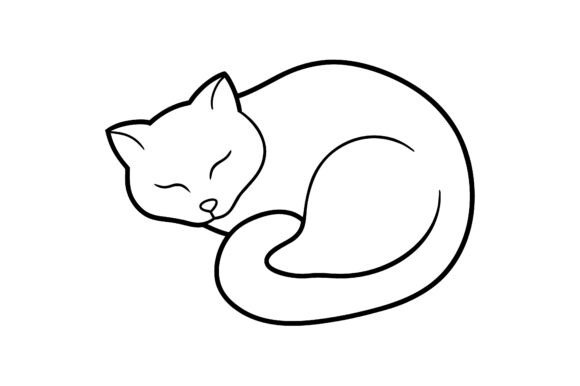
To appreciate the significance of a sleeping cat icon, one must first understand the medium itself. Single line art, often referred to as continuous line drawing, is a technique where an image is drawn with a single, unbroken line. In the context of digital vector illustrations, this translates to smooth outlines and abstract shapes that convey a complex subject with minimal strokes.
When applied to a subject as universally recognized as a cat, the result is a silhouette that captures the essence of the animal without getting bogged down in unnecessary detail. The "curled up" posture is crucial here; it suggests comfort, safety, and tranquility. By stripping away fur texture, shading, and background noise, the artist forces the viewer to focus on the form and the feeling. This approach aligns perfectly with the professional flat design style that dominates modern web interfaces and mobile applications today.
The Psychology of Minimalist Icons
Why does a simple outline of a sleeping cat resonate so deeply? The answer lies in cognitive load theory. In our hyper-connected world, users are bombarded with information constantly. Complex, highly detailed images require more mental energy to process. In contrast, a clean and modern line art icon is instantly recognizable. It bypasses the need for deep analysis and communicates its message immediately.
Furthermore, the subject matter plays a vital role. Cats are symbols of independence, mystery, and relaxation. When depicted in a sleeping state, they evoke feelings of peace and contentment. Using such an asset in branding or creative projects can subconsciously transfer these positive emotions to the user. For example, a meditation app using a sleeping cat icon creates an immediate association with calmness, whereas a tech startup might use it to suggest a seamless, stress-free user experience.
Practical Applications in Branding and Digital Projects
The versatility of this minimal vector illustration makes it an indispensable tool for various creative endeavors. Its adaptability allows it to function effectively across different scales and mediums, from tiny favicons on a browser tab to large-scale print banners.
Enhancing UI/UX Elements
In the realm of User Interface (UI) and User Experience (UX) design, clarity is king. A cat curled up sleeping single line art icon can serve multiple functional roles:
- Status Indicators: It can represent a "do not disturb" mode, a system sleep state, or a user's offline status in a chat application.
- Decorative Symbols: Placed strategically in empty spaces (whitespace), these icons add character without overwhelming the layout.
- Navigational Cues: In pet-related apps or lifestyle blogs, such an icon can intuitively guide users to sections about rest, care, or home life.
Because the design features smooth outlines, it remains legible even when scaled down significantly. This scalability is a hallmark of high-quality vector assets, ensuring that the icon looks crisp on both high-resolution Retina displays and standard mobile screens.
Building a Contemporary Brand Identity
For businesses, logos and brand assets are the face of their company. A logo based on a clean and modern line art icon silhouette design signals professionalism and modernity. It suggests that the brand is forward-thinking, organized, and values efficiency.
Consider a boutique hotel chain specializing in wellness retreats. Their logo could feature the sleeping cat icon to communicate a promise of restful nights and serene environments. Unlike a photorealistic image which might feel dated or heavy, the abstract shape of the line art feels timeless. It fits seamlessly into the elegant and contemporary touch required for luxury branding.
Technical Advantages for Graphic Designers
From a technical standpoint, utilizing minimal vector illustrations offers significant advantages over raster-based imagery or complex 3D renders. Vectors are mathematical descriptions of shapes, meaning they can be resized infinitely without losing quality. This is essential for responsive web design, where assets must look perfect on devices ranging from smartwatches to 4K monitors.
Moreover, the flat design style inherent in these illustrations ensures faster loading times. Smaller file sizes contribute to better site performance, a critical factor for search engine optimization (SEO) and user retention. When a website loads quickly, users stay longer, and search engines rank the site higher. Therefore, choosing a lightweight yet expressive asset like a single line cat icon is a strategic decision that benefits both aesthetics and performance.
Common Misunderstandings About Minimalism
A common assumption among beginners is that minimalist design equates to "easy" design. However, creating a compelling single line art piece requires a sophisticated understanding of composition, negative space, and balance. Every curve and angle must be intentional. If the line is too thick, the icon loses delicacy; if it is too thin, it may disappear on certain backgrounds.
Another misconception is that simple icons lack personality. On the contrary, the constraints of single-line drawing often force the artist to find the most unique and expressive representation of the subject. The sleeping cat is not just a circle with ears; the slight curve of the tail or the position of the paws tells a story. This ability to convey narrative through abstraction is what separates good design from great design.
Integrating Line Art into Your Creative Workflow
Whether you are designing a website, creating social media graphics, or developing a new product package, incorporating these versatile assets can elevate your project. Here is how you can start integrating them effectively:
- Choose the Right Color Palette: While the line art itself is often monochromatic, pairing it with a soft, calming color palette can enhance the mood of tranquility associated with the sleeping cat.
- Maintain Consistency: If you use a single line style for your cat icon, ensure that other icons in your set match this weight and stroke width. Consistency creates a cohesive visual language.
- Play with Context: Use the icon in unexpected places. Instead of just a logo, try using it as a watermark, a divider between text sections, or a subtle background pattern.
- Focus on Whitespace: Allow the icon room to breathe. Crowding a delicate line art piece with other elements defeats the purpose of its minimal nature.
The Future of Visual Communication
As technology continues to evolve, the demand for clear, efficient, and emotionally resonant visuals will only grow. Augmented reality (AR), virtual reality (VR), and voice-activated interfaces all rely on intuitive symbols to guide users. The cat curled up sleeping single line art is a prime example of a design element that is ready for this future. Its simplicity makes it adaptable to new platforms, while its emotional core ensures it remains relevant to human experiences.
In conclusion, this type of illustration is far more than a decorative flourish. It is a strategic asset that bridges the gap between functionality and emotion. By embracing the clean and modern line art icon silhouette design, creators and businesses can produce work that is not only visually stunning but also deeply effective in communicating their message. As we move further into a digital-first era, the power of a single, well-placed line will continue to define the standards of elegant and contemporary creativity.