Watercolor Skull Clipart: Elevating Design with Artistic Depth
In the evolving landscape of digital creativity, the demand for assets that bridge the gap between raw vector graphics and hand-painted artistry has never been higher. Watercolor Skull Clipart represents a specific niche where traditional artistic techniques meet modern digital utility. Unlike the stark, high-contrast lines often associated with standard skull imagery, watercolor interpretations introduce texture, fluidity, and an organic unpredictability that resonates deeply with contemporary design trends. For creators, marketers, and hobbyists alike, these elements offer a unique way to inject personality and warmth into projects that might otherwise feel sterile or overly commercial.
The appeal of this aesthetic extends far beyond simple Halloween decorations. While the skull is a universal symbol often linked to mortality or the macabre, the watercolor medium softens its edges, transforming it into a motif of elegance, resilience, and artistic expression. This shift in perception aligns perfectly with current market preferences for authentic, human-centric design. As audiences become more saturated with polished, AI-generated perfection, there is a growing appetite for visuals that retain the "hand-made" feel, complete with subtle brushstrokes and color bleeds.
The Evolution of Digital Assets: From Vectors to Textures
To understand the relevance of Skull Clipart in a watercolor style, one must look at how digital workflows have changed over the last decade. In the early days of web design and print media, scalability was king. Vector graphics were the undisputed champions because they could be resized infinitely without losing quality. However, as screen resolutions increased and printing technology advanced, the limitations of flat vectors became apparent. They often lacked the depth and tactile quality that physical media provided.
Today's designers are looking for hybrid solutions. They need files that are high-resolution enough for large-format printing but flexible enough for digital manipulation. This is where a set of illustrations like the one described—featuring six distinct files in RGB PNG format at 3600 x 3600 pixels and 300 dpi—becomes essential. These specifications ensure that whether you are designing a small social media graphic or a large wedding invitation, the image retains its crispness and detail. The inclusion of transparent backgrounds allows these elements to blend seamlessly into any composition, acting as the perfect foundation for layered designs.
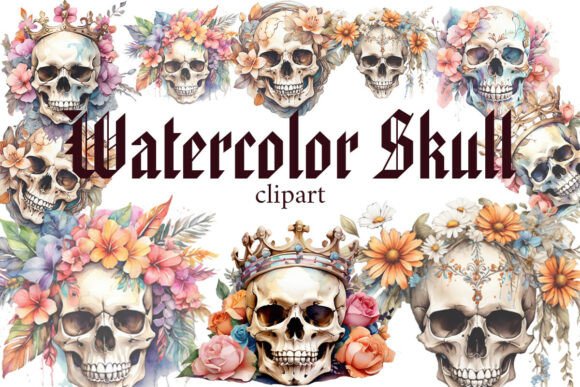
The transition from rigid shapes to fluid patterns reflects a broader cultural shift. We are seeing a move away from the "corporate Memphis" style that dominated the late 2010s toward designs that feel more curated and bespoke. A watercolor picture of a Halloween skull, when paired with floral wreaths or crowns, tells a story of life and death coexisting beautifully. It suggests a narrative rather than just displaying an icon. This storytelling capability is crucial for brands and individuals trying to build an emotional connection with their audience.
Integrating Artistic Elements into Modern Workflows
For professionals working in diverse fields—from blog editors to scrapbook enthusiasts—the practical application of these assets is vast. The versatility of the PNG format means these images can be imported into almost any graphic editor that supports layers. Whether you are using industry-standard software like Photoshop or Procreate, or user-friendly platforms like Canva Pro and Cricut Design Space, the workflow remains intuitive.
Consider the workflow of a planner enthusiast creating a custom journal cover. By downloading a zip file containing individual images of skulls, patterns, flowers, and crowns, they gain the freedom to arrange these elements according to their personal taste. They can scale a watercolor flower wreath to frame a central skull, adjust opacity to create a ghostly effect, or layer textures to mimic paper grain. This level of customization is what separates mass-produced templates from truly unique creations.
Similarly, for entrepreneurs running online stores, these assets can define a brand identity. Imagine a boutique selling handmade candles or gothic jewelry. Using Watercolor Skull Clipart on product packaging or website banners immediately communicates a specific vibe: edgy yet refined, dark yet romantic. It signals to the customer that the brand values aesthetics and attention to detail. In a crowded marketplace, such visual differentiation is not just a bonus; it is a necessity.
Practical Applications Across Industries
The utility of this specific set of illustrations goes well beyond seasonal use. While the Halloween theme is obvious, the components within the pack—patterns, flowers, crowns, and wreaths—are timeless. Let’s explore how different sectors can leverage these tools effectively.
- Wedding and Event Design: The juxtaposition of a skull with delicate florals has become a popular choice for alternative weddings. Couples seeking a non-traditional aesthetic often look for motifs that reflect their unique personalities. A watercolor crown or wreath surrounding a skull can serve as a stunning centerpiece for invitations, save-the-date cards, or table runners. The 300 dpi resolution ensures that these prints look professional and high-end.
- Digital Scrapbooking and Memory Keeping: For hobbyists who digitize their memories, having high-quality PNGs with transparent backgrounds is invaluable. These elements can be used to embellish photo albums, mark special dates, or create themed pages. The ability to open these files in any editor allows for precise placement and blending modes, making the final layout look cohesive and professionally designed.
- Fabric and Surface Printing: With the rise of print-on-demand services, creators can apply these designs to t-shirts, tote bags, mugs, and phone cases. The RGB color space is optimized for screens, but when converted correctly for CMYK printing, the vibrant hues of the watercolor style translate well to fabric and other surfaces. This opens up revenue streams for artists who want to sell physical products without holding inventory.
- Blogging and Content Creation: Bloggers covering topics ranging from horror literature to interior design can use these images to break up text and add visual interest. A well-placed illustration can increase time-on-page and reduce bounce rates, as readers are drawn to engaging visuals. Furthermore, using original clipart helps avoid copyright issues that often plague content creators relying on stock photography.
Navigating Technical Requirements and Best Practices
While the creative possibilities are endless, successful implementation requires a basic understanding of the technical aspects. The package typically arrives as a single zip file containing six individual PNG files. Before diving into a project, it is advisable to verify that your chosen software supports the necessary features. For instance, if you plan to manipulate the layers or adjust the blending modes, tools like Photoshop or Procreate will offer the most control. If you are using Canva, ensure you have the Pro version to access transparent background features and advanced editing tools.
It is also important to consider the context of your design. Watercolor effects rely heavily on contrast and negative space. Placing a light-colored watercolor skull on a white background might result in a loss of detail. Instead, try pairing it with darker tones or textured paper backgrounds to make the colors pop. Additionally, while the approximate size of 3600 x 3600 pixels is generous, always check the final output dimensions. If you are printing a large banner, you may need to upscale slightly, though doing so beyond the native resolution can lead to pixelation.
Furthermore, users should be aware of licensing terms associated with digital downloads. Most instant download packages are intended for personal use or specific commercial applications, depending on the creator's policy. Ensuring you have the right permissions before using these assets for client work or merchandise sales is a critical step in maintaining professional integrity.
Looking Ahead: The Future of Creative Assets
As we move forward, the line between digital and physical art will continue to blur. Tools that allow for seamless integration of hand-painted styles into digital environments will become even more prevalent. The popularity of Skull Clipart in watercolor form is indicative of a larger trend: the desire for authenticity in a digital world. People crave content that feels touched by human hands, even if it is ultimately consumed on a screen.
For creators, this means that investing in high-quality, versatile asset packs is a smart strategy. Rather than spending hours painting every element from scratch, utilizing a curated set of illustrations allows for faster turnaround times without sacrificing quality. It empowers freelancers and business owners to produce professional-grade materials efficiently.
Ultimately, the value of these resources lies in their ability to inspire. A simple collection of six files—a skull, patterns, flowers, a crown, and a wreath—can spark a multitude of ideas. From a spooky Halloween card to a sophisticated wedding invitation, the potential is limited only by the imagination of the user. By embracing these tools and understanding their capabilities, anyone can elevate their visual communication and stand out in an increasingly competitive digital landscape.
Thank you for exploring the potential of these artistic resources. Whether you are a seasoned designer or a curious hobbyist, the right tools can transform your vision into reality. Make sure you have the necessary knowledge or software to work with the files before purchasing, and let your creativity flow.