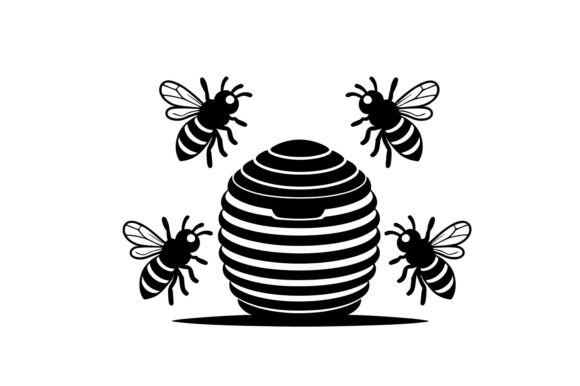
Vector Art of Bee Hive: A Strategic Asset for Modern Design Workflows
In the landscape of digital creation, the distinction between a generic image and a strategic design asset often determines the success of a project. The Vector Art of Bee Hive represents more than just an illustration of nature; it is a functional tool designed to integrate seamlessly into complex creative processes. For professionals ranging from print-on-demand entrepreneurs to educational publishers, understanding how to leverage this specific type of vector file can streamline production, enhance brand consistency, and significantly reduce time spent on technical adjustments.
This article explores the practical application of high-quality EPS vector illustrations within real-world workflows. By examining the technical advantages, implementation strategies, and integration points of the Vector Art of Bee Hive, creators can make informed decisions about asset acquisition and deployment. Whether you are launching a new merchandise line or preparing materials for a classroom, the flexibility offered by editable vector formats provides a competitive edge over static raster images.
Understanding the Technical Foundation
Before integrating any graphic into a project, it is essential to understand the underlying technology. The Vector Art of Bee Hive is delivered primarily as an EPS (Encapsulated PostScript) file. Unlike JPEGs or PNGs, which rely on pixels to form an image, vector graphics use mathematical equations to define shapes, lines, and curves. This fundamental difference dictates how the asset behaves during the execution phase of a design project.
The primary advantage of this format is infinite scalability. In a typical workflow, a designer might need to resize a logo for a business card and then scale the same graphic up for a large format poster. With raster images, scaling up results in pixelation and loss of clarity. With the Vector Art of Bee Hive, the mathematical paths recalculate instantly, ensuring crisp edges and clean lines at any dimension. This reliability is crucial for print production, where resolution requirements are strict and errors can lead to costly reprints.
Furthermore, the inclusion of a high-resolution JPEG file serves a specific purpose in the planning stage. While the EPS file is the workhorse for professional editing, the JPEG acts as a rapid prototyping tool. It allows marketers and project managers to visualize the concept quickly without opening heavy vector software. This dual-format delivery supports a phased approach to design, enabling quick decision-making before committing to detailed customization.
Integration into Professional Workflows
The utility of the Vector Art of Bee Hive extends across various stages of a project lifecycle, from initial concepting to final production. Its adaptability makes it suitable for diverse industries, each with unique requirements for speed, quality, and customization.
Pre-Production and Conceptualization
During the planning phase, designers often need to mock up ideas to secure client approval or validate a product concept. The Vector Art of Bee Hive fits perfectly here. Because the file is fully editable, a designer can rapidly alter color palettes to match a brand's identity guide. If a client requests a shift from traditional yellow and black to a pastel palette for a children's educational series, the vector paths allow for instant color changes without redrawing the entire illustration. This agility accelerates the feedback loop, allowing teams to iterate faster and finalize concepts sooner.
Additionally, the ability to customize details means the asset can be adapted to fit specific thematic needs. A bee hive illustration might be simplified for a minimalist logo or enhanced with intricate textures for a detailed scrapbooking layout. This versatility ensures that the asset remains relevant throughout the brainstorming process, serving as a flexible building block rather than a rigid constraint.
Execution and Customization
Once the concept is approved, the execution phase begins. Here, the EPS format becomes indispensable. Using industry-standard vector software such as Adobe Illustrator or CorelDRAW, professionals can manipulate individual elements of the Vector Art of Bee Hive. Paths can be adjusted, nodes moved, and strokes modified to align perfectly with other design elements.
For apparel merchandise, this level of control is vital. Screen printing requires precise separation of colors and clean vector paths to ensure ink lays correctly on fabric. The editable nature of the file allows technicians to optimize the artwork for specific printing techniques, whether it is DTG (Direct-to-Garment), screen printing, or embroidery digitizing. Similarly, for crafting DIY projects, hobbyists can adjust the complexity of the design to match their skill level or the capabilities of their cutting machines, such as Cricut or Silhouette devices.
Post-Production and Long-Term Use
The value of a vector asset does not end with the first project. The Vector Art of Bee Hive is an investment in long-term efficiency. Once customized and saved, the file can be archived and reused for future campaigns, seasonal updates, or cross-media applications. For example, a logo created for a summer t-shirt collection can be easily repurposed for winter holiday cards by simply adjusting the background or adding seasonal accents, thanks to the non-destructive nature of vector editing.
This longevity contributes to brand consistency. By maintaining a master vector file, businesses ensure that their visual identity remains uniform across all touchpoints, from web graphics to physical packaging. It eliminates the risk of degradation that occurs when repeatedly saving and resaving raster images, preserving the integrity of the brand assets over years of use.
Practical Implementation Strategies
To maximize the potential of the Vector Art of Bee Hive, creators should adopt specific practices regarding file management, compatibility checks, and quality control. These steps ensure smooth integration into existing systems and prevent common pitfalls associated with digital asset management.
- File Organization: Establish a clear folder structure for your vector assets. Store the original EPS file separately from working copies to prevent accidental overwrites. Label files descriptively, including version numbers if multiple iterations exist.
- Software Compatibility: Verify that your design software supports the EPS version provided. While most modern vector tools handle EPS files well, older versions may require conversion. Always open the file in a dedicated vector editor before importing it into layout programs like InDesign to maintain editability.
- Color Mode Verification: Check the color mode of the file against your output requirements. Print projects typically require CMYK color profiles, while digital assets need RGB. Since the Vector Art of Bee Hive is fully editable, you can convert the color mode without losing quality, but doing so early in the workflow prevents last-minute adjustments.
- Resolution Testing: Even though vectors are resolution-independent, always export a test JPEG or PDF at 100% zoom to inspect fine details. Ensure that no stray anchor points or hidden layers interfere with the final output, particularly for intricate designs like a bee hive structure.
Use Cases Across Industries
The versatility of the Vector Art of Bee Hive allows it to serve multiple sectors effectively. Understanding these specific applications helps users tailor their implementation strategy to their niche.
Print-on-Demand and Merchandise
For entrepreneurs utilizing platforms like Redbubble, Etsy, or Shopify, the ability to create high-quality, scalable designs is critical. The Vector Art of Bee Hive can be applied to t-shirts, mugs, tote bags, and phone cases. The sharpness of the vector lines ensures that the design looks professional even on small items, avoiding the blurry appearance common with low-resolution uploads.
Educational Materials and Publishing
Teachers and publishers often require engaging visuals to explain complex biological concepts or decorate learning materials. The customizable nature of this illustration allows educators to highlight specific parts of the hive, add labels, or simplify the design for younger audiences. It serves as a reliable resource for creating worksheets, flashcards, and textbook illustrations.
Branding and Corporate Identity
Small businesses and startups frequently look for symbols that convey community, hard work, and organization—traits associated with bees. The Vector Art of Bee Hive can be adapted into a corporate logo or branding element. Its clean lines and geometric structure lend themselves well to modern, minimalist branding styles, making it suitable for tech companies, consulting firms, and eco-friendly brands alike.
Crafting and Personal Projects
Hobbyists engaged in scrapbooking, card making, and wall art creation benefit from the precision of vector files. When used with die-cutting machines, the Vector Art of Bee Hive produces perfect cuts every time. The included JPEG also offers a quick solution for those who prefer to print and cut manually, providing a ready-to-use option for immediate projects.
Quality Control and Ethical Considerations
In the era of AI-generated content, distinguishing between automated outputs and professionally refined assets is important for maintaining standards. This specific Vector Art of Bee Hive was created using AI-generated concepts as a starting point but has been fully vectorized, resized, and carefully edited by a human designer. This hybrid approach combines the speed of generative AI with the precision and artistic judgment of a professional.
The manual editing process ensures that the paths are clean, the geometry is accurate, and the overall composition meets industry standards. This attention to detail is crucial for professional applications where flaws in a vector path could ruin a print run or compromise a brand's image. Users can trust that the asset has undergone rigorous quality control, offering a level of reliability that raw AI outputs often lack.
By choosing a fully editable, professionally vetted vector file, creators protect their projects from technical issues and ensure a polished final product. This commitment to quality aligns with the principles of E-E-A-T (Experience, Expertise, Authoritativeness, and Trustworthiness), providing users with a resource they can rely on for both current and future endeavors.
Conclusion
The Vector Art of Bee Hive is a robust tool designed to meet the demands of modern creative workflows. From its scalable EPS format to its versatile application across print, digital, and craft mediums, it offers a solution that balances flexibility with precision. By understanding how to integrate this asset into planning, execution, and long-term archiving, professionals and hobbyists alike can enhance their productivity and output quality. Whether you are designing a logo, creating educational content, or launching a merchandise line, the strategic use of high-quality vector art ensures that your vision is realized with clarity and professionalism.