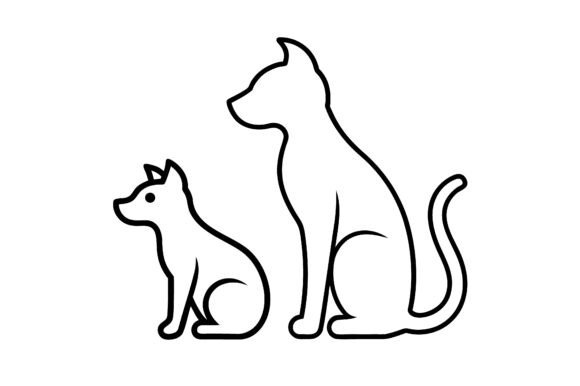
Elevating Brand Identity with Cat and Dog Together Minimal Line Art
In the rapidly evolving landscape of digital design, clarity has become the ultimate currency. As screens multiply and user attention spans fragment, the ability to communicate a message instantly through visual cues is paramount. This shift has propelled Cat and Dog Together Minimal Line Art from a niche illustration style into a cornerstone of modern branding. This specific aesthetic—characterized by smooth outlines, abstract shapes, and a professional flat design style—offers more than just decorative appeal; it serves as a strategic tool for professionals, creators, and entrepreneurs seeking to establish an elegant and contemporary presence in a crowded marketplace.
The convergence of feline and canine imagery within a single, cohesive line art composition represents a unique intersection of emotional resonance and technical precision. It captures the universal theme of companionship while adhering to the rigorous demands of modern UI/UX standards. For designers and business owners alike, understanding the power of this asset is essential for navigating current creative trends and future-proofing visual strategies.
The Evolution of Minimalism in Digital Assets
To understand why Cat and Dog Together Minimal Line Art resonates so deeply today, one must look at the broader trajectory of graphic design over the last decade. The industry has moved decisively away from heavy gradients, drop shadows, and photorealistic textures that defined the early 2000s. In their place, a cleaner, more functional aesthetic has emerged. This movement prioritizes scalability, speed, and legibility across various devices.
This minimal vector illustration style fits perfectly into that paradigm. By stripping away unnecessary details and focusing on the essential contours of the subjects, the design ensures that the image remains recognizable whether it is displayed as a tiny favicon on a browser tab or blown up on a large format billboard. The use of smooth outlines creates a sense of fluidity and motion, even in a static image, which is crucial for engaging users who are often scanning content rather than reading it linearly.
Furthermore, the adoption of abstract shapes within these compositions allows for greater versatility. The interplay between the distinct silhouettes of a cat and a dog can be simplified into geometric harmonies that speak to balance and unity. This abstraction invites the viewer to fill in the gaps, creating a more active and memorable engagement with the brand identity.
Why Professionals Are Turning to Line Art Icons
The surge in popularity of this specific design element is not accidental. It is driven by changing needs and expectations in the digital workspace. As businesses expand their online footprints, they require assets that are lightweight yet impactful. High-resolution photographs often slow down page load times, whereas a clean and modern line art icon silhouette design is incredibly efficient. This efficiency directly correlates with better search engine rankings and improved user retention rates.
Moreover, there is a psychological component to this trend. In an era of information overload, consumers crave simplicity and authenticity. The depiction of a cat and dog together evokes feelings of warmth, loyalty, and harmony. When rendered in a minimalist style, these emotions are conveyed without the clutter of complex backgrounds or distracting colors. This makes the asset particularly effective for industries ranging from pet care and veterinary services to lifestyle brands and tech startups looking to humanize their interface.
- Scalability: Vector-based line art ensures crisp rendering at any resolution, making it ideal for responsive web design.
- Brand Consistency: A unified line weight and style allow for easy integration into existing design systems without clashing with typography or other UI elements.
- Emotional Connection: The subject matter taps into deep-seated cultural affection for pets, fostering immediate rapport with audiences.
- Adaptability: The flat design style allows for easy color customization to match specific brand palettes or seasonal campaigns.
Integrating Line Art into Workflows and Brand Strategy
For freelancers and marketing teams, incorporating Cat and Dog Together Minimal Line Art into their workflow offers a streamlined approach to asset creation. Unlike complex illustrations that require extensive editing time, these icons are designed to be plug-and-play. They function seamlessly as decorative symbols, navigation icons, or central logo marks. This versatility reduces the need for multiple design iterations, allowing creatives to focus on strategy and messaging rather than getting bogged down in production details.
Consider the application of this asset in a mobile app interface. In the context of a pet-sitting platform or a veterinary telehealth service, a simple icon of a cat and dog together can serve as a primary navigation element. Its minimal nature ensures it does not overwhelm the screen real estate, while its recognizability guides the user intuitively. This is where the concept of "elegant and contemporary touch" becomes practical; it enhances usability while simultaneously elevating the perceived quality of the product.
Additionally, the trend towards dark mode interfaces in technology has further cemented the relevance of line art. Solid black or white lines contrast beautifully against both light and dark backgrounds, maintaining visibility and aesthetic appeal regardless of the user's system settings. This adaptability is a critical factor for forward-looking businesses that want to ensure their digital products remain accessible and stylish across all environments.
Observations on Consumer Preferences and Market Trends
Market analysis suggests that consumers are increasingly drawn to brands that demonstrate a commitment to simplicity and transparency. Visual complexity can sometimes signal opacity or confusion, whereas a clean line art style suggests confidence and clarity. When a brand utilizes a professional flat design style, it signals to the consumer that the company values efficiency and modernity.
Furthermore, the specific combination of cats and dogs in a single artwork addresses the growing demographic of multi-pet households. Statistics show that a significant portion of pet owners have more than one animal, often including both species. By featuring them together, the imagery acknowledges this reality and creates a stronger connection with this specific segment of the market. It moves beyond generic pet imagery to reflect the actual dynamics of modern family life.
This alignment with lifestyle trends is what makes the asset so valuable. It is not merely a picture; it is a reflection of the consumer's world. Whether used in social media graphics, email headers, or packaging design, the image reinforces the brand's relevance to the daily lives of its audience.
Future-Proofing Creative Projects with Versatile Assets
As we look toward the future of digital interaction, the demand for versatile, high-quality assets will only increase. The rise of augmented reality (AR) and virtual reality (VR) interfaces requires graphics that can render quickly and clearly in three-dimensional spaces. Minimal line art is uniquely suited for this transition. Its reliance on strong outlines and simple geometry translates effortlessly into 3D models and interactive experiences.
For entrepreneurs building new ventures, investing in a robust library of such assets is a strategic move. It provides a flexible foundation upon which a brand can grow. As the business evolves, the core visual language remains consistent, even as specific applications change. The Cat and Dog Together Minimal Line Art serves as a prime example of how a single, well-crafted concept can anchor a diverse range of creative projects.
Moreover, the sustainability angle cannot be overlooked. In a digital context, sustainability often relates to energy efficiency. Lighter file sizes mean less data transfer and lower energy consumption during transmission. By choosing vector-based line art over heavy raster images, companies contribute to a greener digital footprint, a value proposition that resonates strongly with environmentally conscious consumers.
Practical Applications Across Industries
The utility of this design extends far beyond the pet industry. In the realm of education, it can symbolize teamwork and diversity. In healthcare, it might represent holistic wellness and support. In the tech sector, it could illustrate the harmony between different software ecosystems. The abstract nature of the shapes allows the meaning to be interpreted flexibly, depending on the context in which it is presented.
- Web Design: Use as hero section icons to break up text and guide user flow.
- App Development: Implement as status indicators or feature toggles within the dashboard.
- Print Media: Utilize on business cards, brochures, and merchandise for a tactile, sophisticated look.
- Social Media: Create animated versions of the line art for engaging stories and posts that capture attention quickly.
Ultimately, the decision to use Cat and Dog Together Minimal Line Art is a decision to embrace a design philosophy that values substance over ornamentation. It is a choice to communicate with clarity, empathy, and precision. As the digital landscape continues to evolve, those who master the art of minimalism will find themselves best positioned to connect with audiences, streamline their operations, and build enduring brand identities. The elegance of the line, the simplicity of the form, and the depth of the emotion it conveys make it an indispensable asset for the modern creative toolkit.
By integrating these elements into your workflow, you are not just adding an image to a project; you are enhancing the entire user experience. You are signaling that your brand understands the nuances of the modern world and is prepared to meet its challenges with grace and innovation. In a sea of visual noise, the quiet confidence of a well-executed line art icon speaks volumes.