Cartoon Symmetrical Restaurant Table: A Design Evaluation
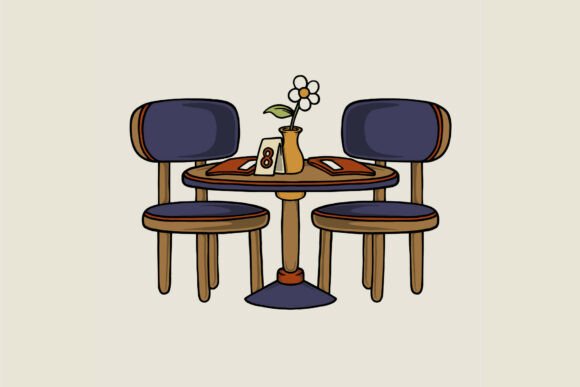
In the competitive landscape of food service and hospitality, visual identity plays a critical role in customer recognition and brand recall. Among the various design assets available to business owners and graphic designers, the Cartoon Symmetrical Restaurant Table has emerged as a distinct concept for logo creation and branding materials. This design element typically features a stylized, balanced table setting rendered in a cartoon aesthetic, often serving as the central motif for a mascot or icon. For those considering this specific asset for their business, it is essential to evaluate its practical application, technical specifications, and alignment with broader marketing goals.
Understanding the Design Concept
The Cartoon Symmetrical Restaurant Table is not merely an illustration of furniture; it is a structured graphic composition designed for scalability and versatility. The term "symmetrical" refers to the balanced arrangement of elements around a central axis, which psychologically conveys stability, order, and professionalism—traits highly valued in the dining industry. When combined with a "cartoon" style, the design injects approachability, fun, and memorability into the brand image.
This type of asset is frequently packaged as part of a professional logo kit. These kits are intended to provide businesses with a ready-made foundation that can be customized. Unlike static images found on general stock photo sites, these designs are engineered to function as core branding elements. They are often delivered alongside other formats to ensure they can be adapted for various mediums, from digital social media avatars to large-scale signage.
Technical Specifications and File Formats
When evaluating the utility of a design asset like the Cartoon Symmetrical Restaurant Table, the technical delivery method is just as important as the visual appeal. High-quality design packages typically include multiple file formats to accommodate different software environments and production needs.
- AI (Adobe Illustrator): This format provides a fully editable vector file. Vectors are mathematical-based graphics that allow for infinite scalability without any loss of quality. This is crucial for printing large banners or scaling down for mobile app icons while maintaining crisp edges.
- PSD (Adobe Photoshop): Layered raster files offer flexibility for quick edits. While not infinitely scalable like vectors, high-resolution PSDs (often 4000x4000px at 300 DPI) are ideal for web use, social media posts, and print materials where slight resizing does not compromise clarity.
- EPS: As a versatile vector format, EPS ensures compatibility with a wide range of design software beyond the Adobe ecosystem, making it a safe choice for professional printers and third-party designers.
These files are usually compressed into a single ZIP archive. Users should be prepared to extract these files using standard utilities like WinRAR or by double-clicking the folder on most operating systems. The organization of layers within these files is a key feature, allowing users to isolate specific elements such as colors, text, or background shapes for modification.
Benefits for Brand Identity
For a restaurant or food-related business, adopting a mascot-style logo centered on a symmetrical table offers several strategic advantages. First, symmetry creates a sense of harmony that is visually pleasing and easy for the human brain to process quickly. In a crowded marketplace, a balanced logo can stand out due to its structural integrity.
Secondly, the cartoon style lowers the barrier to entry for customers. It suggests a casual, family-friendly atmosphere rather than a rigid, formal dining experience. This makes it particularly effective for cafes, fast-casual eateries, food trucks, and children's dining areas. The ability to customize the design further enhances its value. By adjusting colors to match existing brand palettes or modifying the text to reflect the business name, owners can create a unique identity without the cost of commissioning a custom illustration from scratch.
Furthermore, the high resolution (300 DPI) ensures that the design looks professional across all touchpoints. Whether printed on napkins, menus, or storefront signs, the image remains vibrant and sharp, reinforcing the perception of quality in the physical product.
Considerations and Tradeoffs
While the Cartoon Symmetrical Restaurant Table offers significant benefits, there are tradeoffs to consider before committing to this design direction. The primary consideration is the nature of the business itself. A cartoonish, symmetrical table may not align with the brand voice of a fine dining establishment, a molecular gastronomy lab, or a minimalist chic bistro. In these contexts, the playful aesthetic might undermine the desired perception of sophistication or exclusivity.
Additionally, while the design is "fully editable," the level of customization depends on the user's proficiency with software like Adobe Illustrator or Photoshop. If a business owner lacks these skills, they may still require a designer to make complex changes, potentially negating some of the cost savings associated with buying a pre-made template. There is also the risk of genericism; since these templates are sold to multiple buyers, two different restaurants could theoretically end up with very similar logos if they do not sufficiently customize the colors, fonts, and layout.
Situational Fit and Alternatives
The Cartoon Symmetrical Restaurant Table is a strong fit for specific scenarios. It is ideal for startups looking to launch quickly with a professional look on a budget. It is also suitable for rebranding efforts where a business wants to shift towards a more welcoming, community-focused image. Franchises or chains that need consistent, scalable assets across multiple locations will find the vector capabilities particularly useful.
However, alternatives may be worth considering in certain situations. If a brand requires a completely unique intellectual property asset that cannot be traced back to a template library, hiring a freelance illustrator to create a bespoke mascot from scratch is the better path. Similarly, businesses aiming for a modern, abstract, or typographic-heavy logo might find a literal illustration of a table too cluttered or traditional. In cases where the target demographic is strictly corporate or luxury-oriented, a minimalist symbol or a monogram might serve the brand strategy more effectively.
Decision-Making Insights
To determine if the Cartoon Symmetrical Restaurant Table aligns with your goals, ask the following questions:
- Does my brand voice lean towards friendly and accessible? If yes, the cartoon style is likely appropriate.
- Do I have access to basic design software? If you can open AI or PSD files, you can leverage the full potential of the editable layers.
- Is speed and cost a priority? This solution offers a faster turnaround than custom design work.
- Can I differentiate the design? Ensure you plan to change the color scheme and typography significantly to avoid looking like a competitor.
Ultimately, the decision rests on balancing the need for a bold, memorable identity with the specific aesthetic requirements of the restaurant. The Cartoon Symmetrical Restaurant Table provides a robust, high-quality foundation that, when used correctly, can help a business establish a cohesive and recognizable presence in the market. By understanding the technical strengths and stylistic limitations, stakeholders can make an informed choice that supports their long-term branding objectives.